Turning computational predictions into a practical workflow for safer chemical design
Computational models can predict many properties relevant to chemical safety long before extensive experimental data become available. But having a prediction is not the same as knowing whether it is sufficiently reliable to support a decision.
A new study by Karolina Jagiello and colleagues (Benjamin Punz and Martin Himly from partner PLUS, and Haralambos Sarimveis and Philip Doganis from NTUA, among them), published in Environment International, addresses precisely this challenge. The authors propose a practical decision-making framework for using QSAR-based in silico methods within the European SSbD framework. Rather than introducing another prediction model, the study focuses on an increasingly important question: How should available models, experimental evidence and uncertainty be combined in an actual SSbD assessment ?
A tiered route from problem formulation to prediction
The proposed workflow follows the logic of the revised JRC SSbD framework and structures early hazard assessment into three steps:
Step 0 – Problem formulation: define the chemical or material, its intended use and the relevant regulatory endpoints
Step 1 – Data gaps and pre-screening: identify reliable experimental information, determine missing data and use relatively simple in silico methods such as structural alerts and read-across to flag potential hazards.
Step 2 – Advanced predictions: where important gaps remain, apply endpoint-specific QSAR models and critically evaluate their reliability, applicability domain and consistency with other evidence.
The workflow is visualised particularly well in the following figure, which shows how decisions can lead either towards further computational assessment, experimental testing or back towards chemical redesign.
“The tiered structure provides a systematic, stepwise framework that balances efficiency in early-stage chemical design with the robustness required for regulatory compliance.”
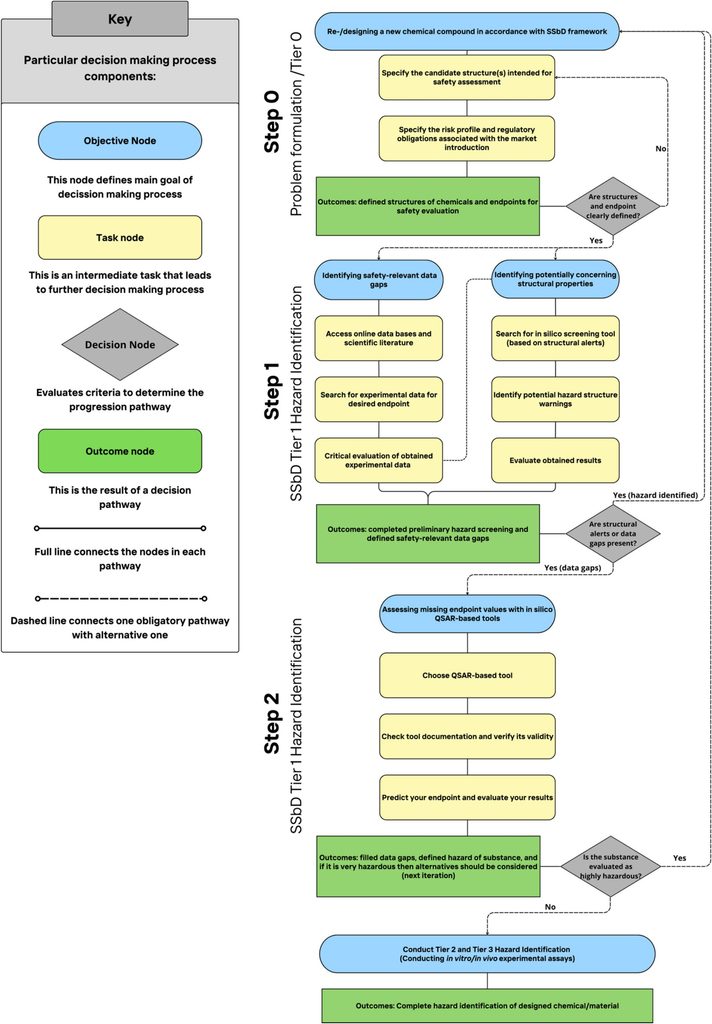
Fig. 1 (taken from the publication): The decision-making framework proposed in this paper.
Importantly, the authors stress that their subdivision of Tier 1 into Steps 1 and 2 is a practical methodological proposal, rather than new official JRC terminology.
Three cases – and three very different situations
The strength of the paper lies in showing what happens under realistic conditions rather than assuming that perfect data are available. Three case studies illustrate progressively more difficult situations. For the flame retardant HBCD, sufficient experimental evidence is available to identify significant safety concerns without relying heavily on additional modelling. For PCDD-15, experimental information is missing, but suitable QSAR models can provide useful predictions for selected endpoints. The third case, the surfactant 353NP, demonstrates the limits of computational prediction. Different models produce conflicting results for persistence and bioaccumulation, and several predictions lie outside their applicability domains. Consequently, the available in silico evidence does not permit a robust conclusion on its PBT status.
This is an important message for computational SSbD: uncertainty is itself a result. A model should not be used simply because it produces a number. Applicability domain, training data, model documentation and agreement between independent lines of evidence determine how much confidence can be placed in a prediction.
“Predictions for compounds outside the AD warrant greater caution and may help identify compounds for which additional verification is needed.”
When uncertainty remains too high, the workflow explicitly directs the practitioner towards read-across, alternative models or targeted experimental testing.
PINKISH: bringing the workflow into a decision-support environment
The authors use PINKISH and the PINK Stage-1 report as an alternative example for situations at the earliest stages of chemical innovation — including candidate substances that have not yet been synthesised and for which experimental safety data therefore do not exist. PINKISH brings together predictive models for endpoints including carcinogenicity, mutagenicity, reproductive and developmental toxicity, endocrine disruption, respiratory and skin sensitisation, and PBT/vPvB and PMT/vPvM properties. Predictions from different models are consolidated into an automated Stage-1 report while discrepancies and inconclusive results remain visible. Figure 6 on page 15 in the publication provides a good illustration: rather than reducing several model outputs to a single apparently definitive answer, the PINK Stage-1 report displays the distribution of positive, negative, inconclusive and out-of-domain predictions.
“This structured integration of modelling outputs supports transparent evaluation and informed selection of candidates for subsequent development stages.”
Why this matters for Safe and Sustainable by Design
The study moves in silico assessment from individual predictions towards a structured decision process. This is particularly important during early chemical and material design, when experimental data are often scarce but opportunities to modify or replace problematic candidates are greatest. Rather than asking simply “What does the model predict ?”, the workflow considers available evidence, data gaps, model applicability and uncertainty to determine whether computational evidence is sufficient or further testing is needed. In silico methods therefore become decision-support tools rather than automatic substitutes for experimental evidence.
PINK builds on this principle by integrating models, data and knowledge resources within a FAIR-oriented digital environment: supporting a systematic path from early screening → uncertainty identification → targeted evidence generation → better-informed design decisions.
The research was supported by the EU Horizon Europe PINK project (Grant Agreement No. 101137809) and if you are interested in reading the full publication follow this link.