Combining generative AI and chemical modelling to identify promising new molecules
Developing new molecules with specific biological properties remains a demanding process, particularly when promising computational predictions must eventually be translated into compounds that can be synthesised and tested. In a recent study published in Artificial Intelligence Chemistry, Koutroumpa at al. from our PINK partner NovaMechanics (A BRAF-focused computational pipeline integrating GPT-based molecular generation, hybrid-reward reinforcement learning and retrosynthetic prioritization. Artificial Intelligence Chemistry, 4, 100134) investigate how generative artificial intelligence can be combined with molecular modelling and synthetic planning to support the identification of potential inhibitors of BRAF, a protein kinase involved in cellular signalling and implicated in several cancers.
Combining generative AI with chemical knowledge
The researchers developed a computational workflow based on a transformer model trained to generate molecular structures represented as SMILES strings. Rather than generating molecules without a specific objective, the model was further optimised through reinforcement learning to favour compounds with potentially stronger interactions with BRAF.
The optimisation combines machine-learning predictions of binding affinity with periodic molecular docking calculations. This approach allows the model to explore new chemical structures while incorporating information about their predicted interactions with the biological target.
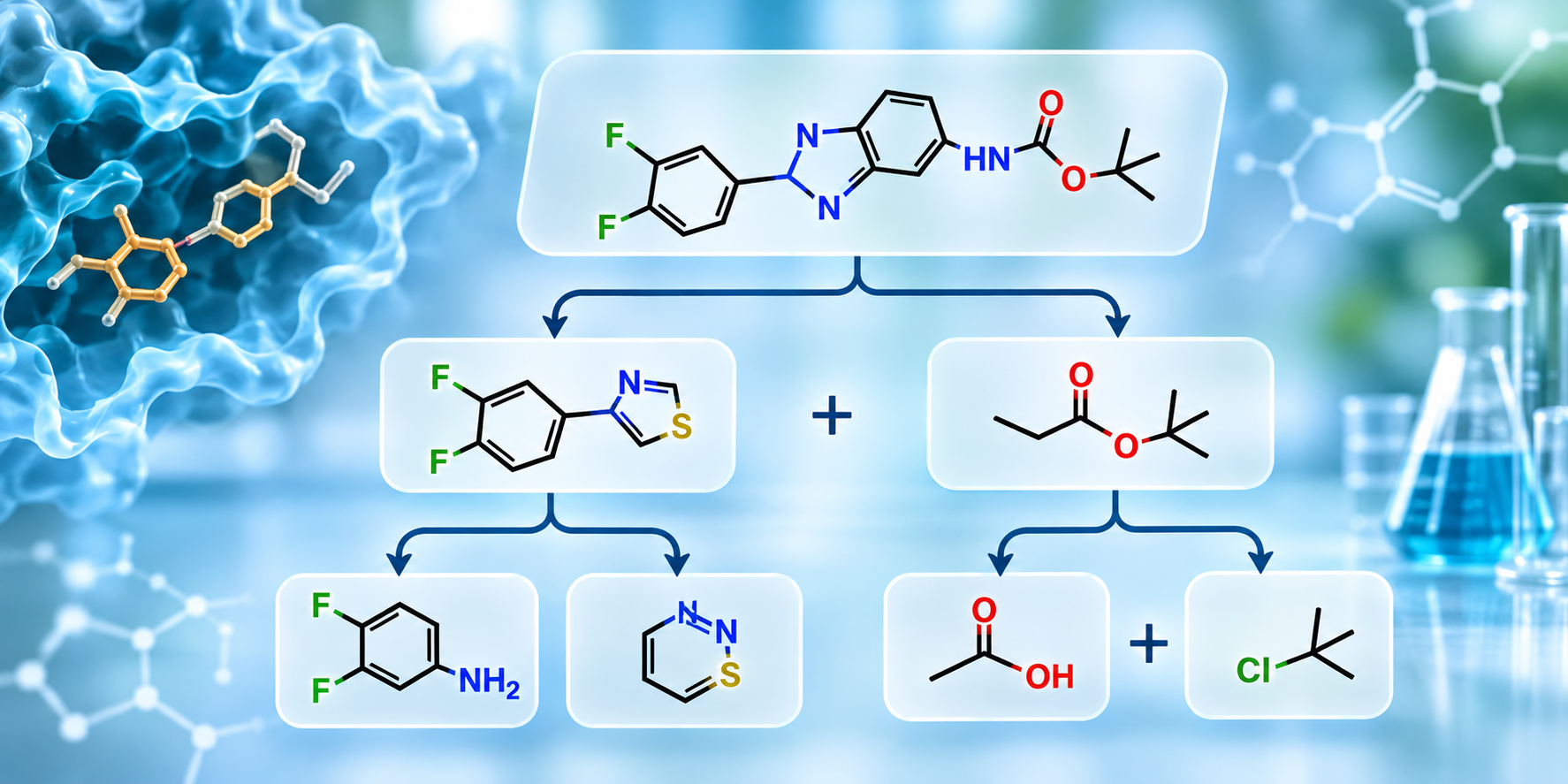
An important feature of the study is the subsequent consideration of synthetic accessibility. Using computational retrosynthetic analysis, the researchers investigated whether promising molecules could potentially be produced from commercially available starting materials.
What did the study demonstrate ?
The combined optimisation strategy achieved more favourable average docking scores than an approach relying exclusively on machine-learning affinity predictions. The generated compounds also showed structural diversity while retaining interaction features associated with known BRAF inhibitors. From the generated structures, 20 molecular candidates were selected for further computational assessment. Complete retrosynthetic routes were identified for 16 of these candidates, suggesting that synthetic planning can be incorporated into the evaluation of AI-generated molecules.
The researchers also examined predicted physicochemical properties and ADMET characteristics, including potential toxicity-related properties. These findings are encouraging, but their limitations are important. The study demonstrates a computational workflow rather than experimentally validated drug discovery. Predicted binding affinities do not establish biological activity, and computationally identified synthesis routes do not guarantee that a compound can be produced successfully in the laboratory.
Relevance for PINK and Safe and Sustainable by Design
Although the study addresses pharmaceutical research rather than the SSbD development of chemicals and materials, its methodology is relevant to PINK. The work illustrates how different computational methods can be connected to guide molecular design and assess the feasibility of proposed structures. This integration is particularly relevant to the development of computational workflows that support decisions before experimental development begins.
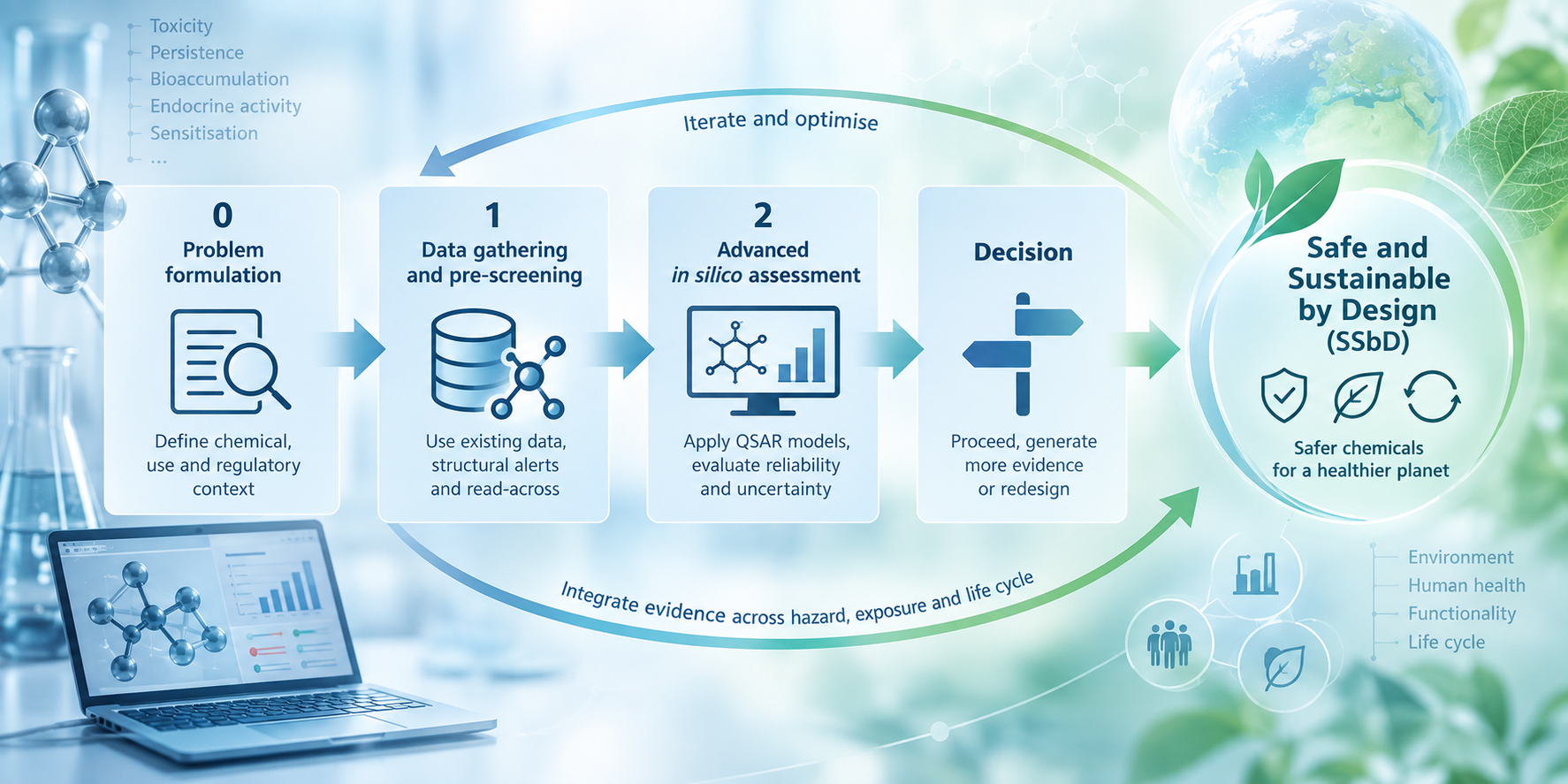
From an SSbD perspective, an interesting opportunity would be to incorporate safety and sustainability considerations directly into the molecular optimisation process, alongside the desired functional properties. In the present study, predicted ADMET properties and synthetic feasibility were considered during the subsequent evaluation of generated candidates, rather than forming a comprehensive set of SSbD objectives. The study therefore provides an example of how computational methods can support more informed molecular design, while also illustrating the further developments needed to address the broader requirements of SSbD.
Outlook
Connecting molecular generation with predictive modelling and retrosynthetic analysis offers a way to evaluate proposed structures before committing to experimental work. Further development towards multi-objective optimisation, including safety and sustainability criteria, could extend the applicability of such workflows beyond pharmaceutical research. The study also reinforces the importance of experimental validation: computational predictions can guide the selection of candidates, but cannot replace the evidence needed to establish their properties and performance.
The research was supported by the EU Horizon Europe PINK project (Grant Agreement No. 101137809) and if you are interested in reading the full publication follow this link.